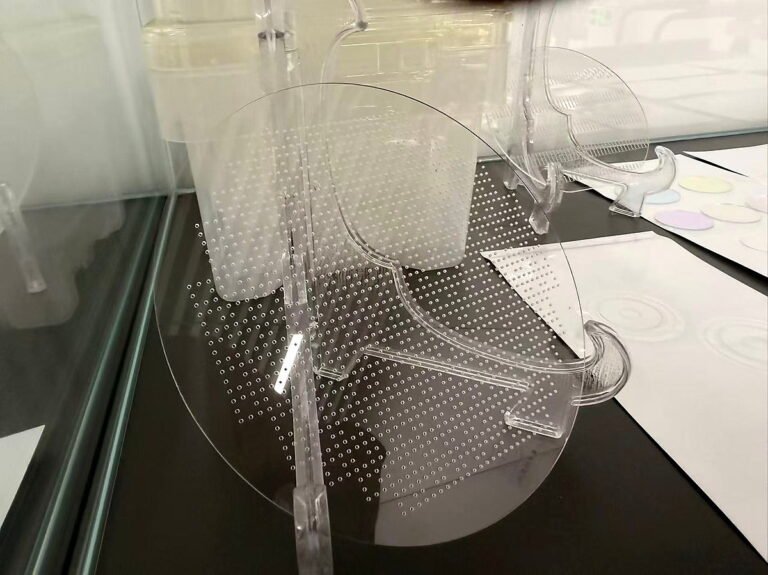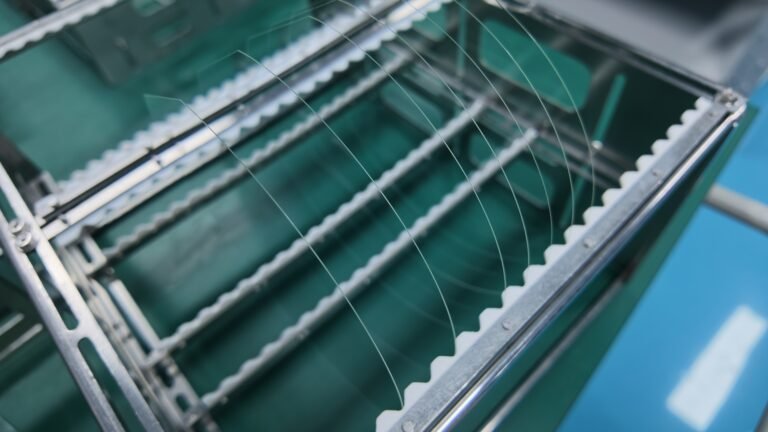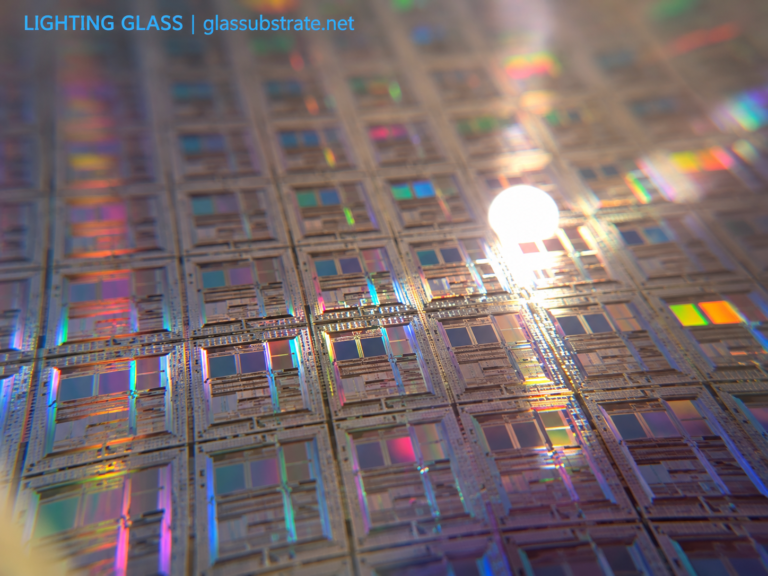



There is no universal count of optical glass types. This guide groups common glass families by engineering use and explains the properties and processing specifications to verify.
First, what counts as optical glass?
No fixed number applies across manufacturers and applications. Individual grades are introduced or discontinued over time. Crown and flint are traditional imaging-glass groups; fused silica, borosilicate, filter and electronic substrate glasses are selected for different functions. The table below groups common families for engineering selection. It is neither an exhaustive standard classification nor a list of interchangeable materials.
Common glasses used in optics: selection table
| Material family | Check first | Typical applications | Selection note |
|---|---|---|---|
| Crown-type imaging glass | Refractive index, Abbe number, transmission, homogeneity | Lenses, prisms, optical windows | Different crown grades are not automatically interchangeable. |
| Flint and high-index imaging glass | Dispersion, partial dispersion, density, chemical durability | Achromatic assemblies and compact optical systems | A high refractive index does not make a grade suitable for every wavelength or environment. |
| Fused silica | Transmission in the specified band, hydroxyl content, thermal properties | UV windows, laser systems, semiconductor equipment | UV and IR performance varies by grade. |
| Borosilicate glass | Thermal expansion, operating temperature, thickness, surface quality | Heat-resistant windows, instrument panels, flat substrates | Borosilicate is not a single composition; verify the exact grade. |
| Alkali-free and aluminoborosilicate substrate glass | Ion content, thermal compatibility, TTV, warp, cleanliness | Display, sensor and electronic-device substrates | Properties and processing limits depend on the specified material. |
| Colored and absorption filter glass | Spectral transmission curve, thickness, environmental stability | Filters, sensors, illumination optics | Cutoff and transmission specifications must state thickness. |
| Infrared chalcogenide glass | IR transmission window, thermal properties, surface protection | IR imaging and detection | Not every infrared window material is glass. |
| Glass-ceramics and specialty glass | Thermal expansion, homogeneity, dimensional stability | Precision structural parts and specialized optical uses | Select glass-ceramics separately from conventional imaging glass. |
Note: This table presents common material directions, not universal numerical properties without grade-specific verification.
How to read the key material specifications
Refractive index nd and Abbe number νd
ndusually denotes the refractive index at the helium d line, about 587.6 nm; νddescribes visible-light dispersion. Optical design requires refractive-index and dispersion data at the actual working wavelengths.
Spectral transmission
Transmission varies with wavelength and thickness. Internal transmission differs from external transmission, which includes surface reflection losses; check the measurement definition in the data sheet.
Thermal expansion and temperature range
CTE must specify the temperature interval and be compared with metals, silicon, adhesives and other assembly materials. For elevated-temperature use, verify the grade-specific temperature limits.
Geometry and surface quality
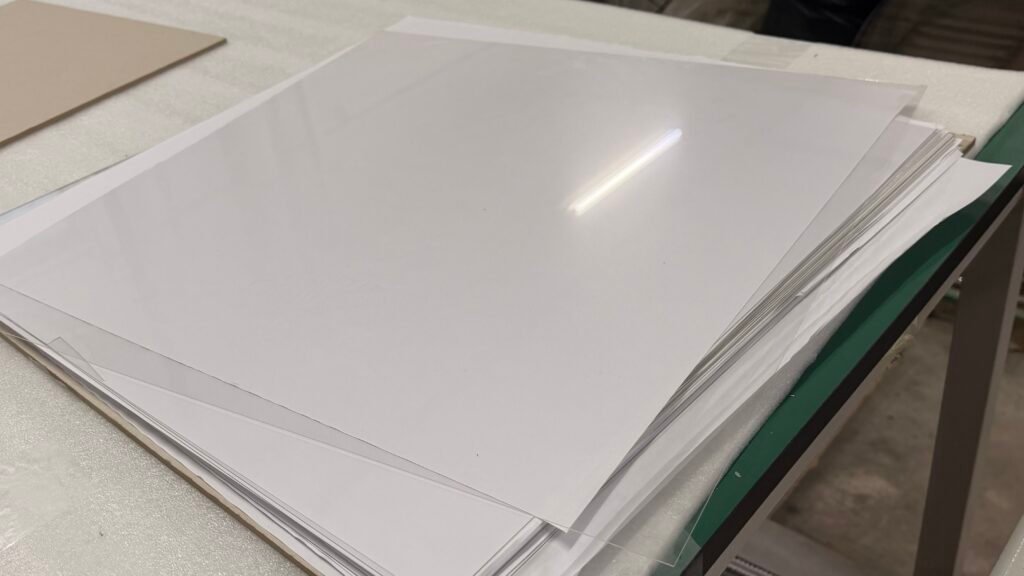
Thickness tolerance, TTV, flatness, warp, roughness and visual defects affect assembly, imaging and downstream processing in different ways. Each needs a defined acceptance criterion.
Select materials from the application
For imaging systems, screen by working wavelength, refractive index and dispersion, then check homogeneity and processability. UV and laser windows require transmission at the specified wavelengths and suitable damage limits. Heat-resistant viewing windows require thermal-cycle, thickness and mounting review. Electronic substrates call for material compatibility, thickness, TTV, warp and cleanliness requirements.
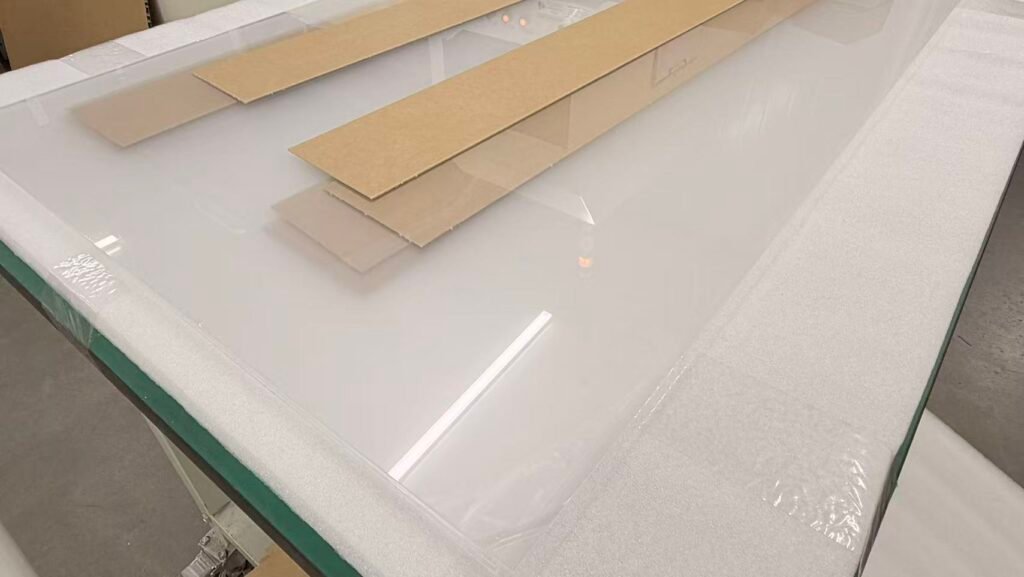
Germanium, silicon and zinc selenide are also used in infrared optics, but they are not glasses and should not be counted as glass types. Once a material is selected, define cutting, edge finishing, polishing, cleaning and inspection requirements from the drawing.
Frequently asked questions
Can one grade be substituted for another within the same family?
No. Grades within one family may differ in refractive index, dispersion, thermal expansion, transmission and available thickness. Recheck the specified grade and design tolerances before any substitution.
Why does sample thickness affect transmission?
A thicker optical path can increase absorption and change measured transmission. Surface finish and coatings also affect external transmission. Compare curves only after checking sample thickness and test method.
What information should a buyer provide?
Provide the material grade or target spectral band, operating temperature, dimensions, thickness, quantity and drawing, together with surface, edge, cleanliness and inspection requirements. If the grade is open, describe the function and environment first.
Review your material and drawing requirements
Send the application conditions, material requirements and drawing to our engineering team for a project-specific material and processing review.