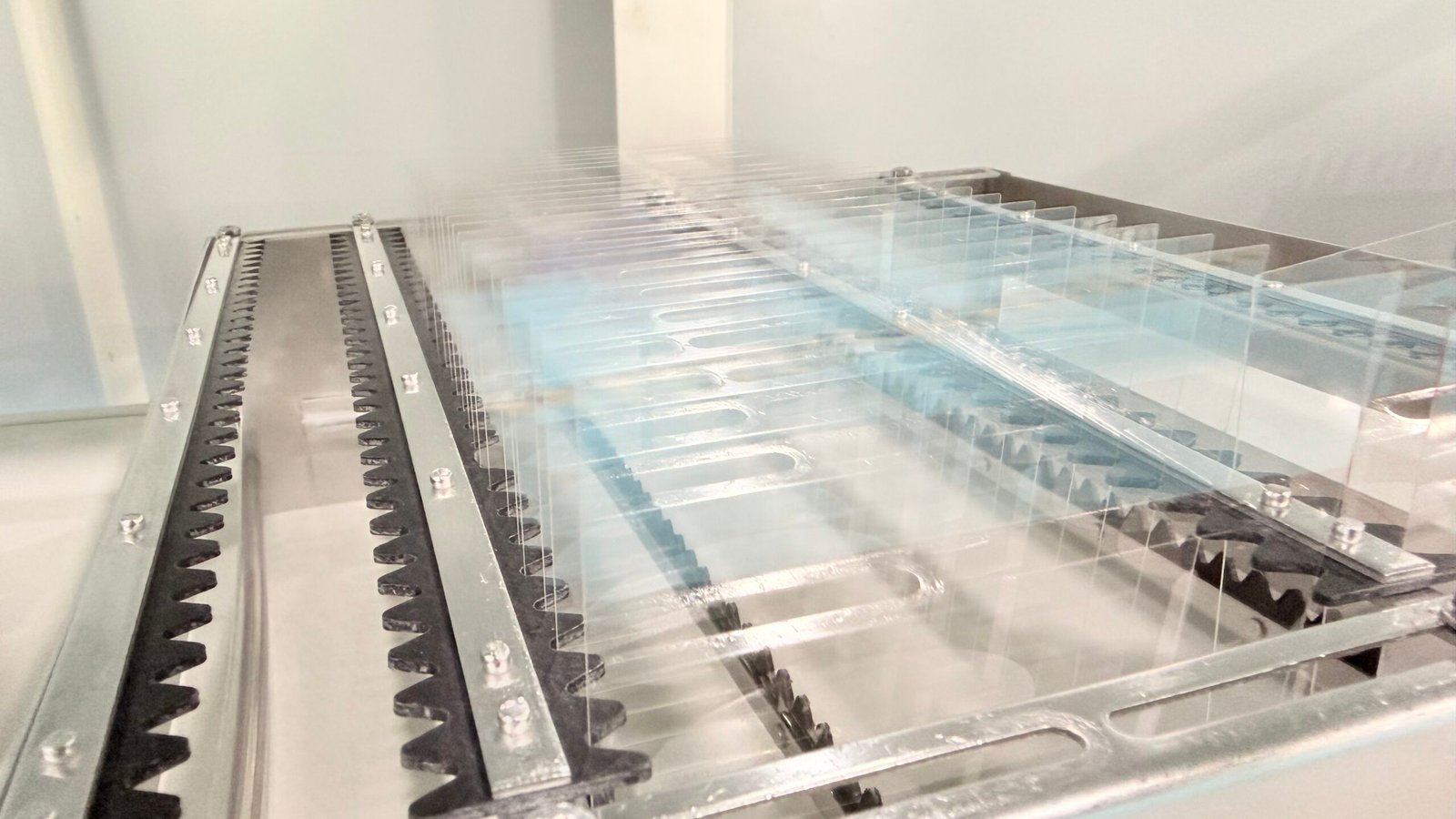
A material family used for viewing windows, instrument parts and precision glass substrates. Thermal, optical and chemical properties depend on composition and manufacturing route; use the specified grade, manufacturer data and drawing to define processing requirements.
High-borosilicate glass has a silica-based network and contains boron oxide among its constituents. The term describes a material family, not a single manufacturer or a universal set of properties. Check the selected grade’s technical data for thermal expansion, transmission, available thicknesses and chemical resistance.
Turn material needs into verifiable specifications
High-borosilicate glass can be considered for flat parts that need transparency, thermal stability or controlled surface condition. Formulation, forming method and thickness affect actual properties; one grade’s test values cannot be treated as guaranteed values for the whole family.
For windows, cover plates, round blanks and rectangular substrates, first confirm operating wavelength, temperature cycle, mounting method and any later coating or bonding. Then specify cutting, edge processing, grinding or polishing, cleaning and inspection. Assess feasible dimensions and tolerances against the selected source sheet and drawing.
Specification Review
Confirm properties for the selected grade
This page does not give property values, stock thicknesses or process guarantees for every grade in this family. Use the selected material’s manufacturer data for purchasing and design. Accept finished parts against the drawing, test methods and project specification agreed by both parties.
Material documentation
Check composition, thermal expansion, transmission and chemical resistance together with their test conditions.
Shape and thickness
Specify source-sheet or finished-part dimensions, thickness, quantity and tolerances.
质量验收
Define surface defects, edge requirements, cleanliness and inspection zones.
Build-to-print processing
From glass sheet to assembly-ready part
Choose the process route around the required outline, thickness, surface and downstream assembly. Assess process steps, achievable tolerances and lead time for the actual material and drawing.
切割与边缘处理按外形、厚度和允许崩边确定装夹及切割路线。研磨与抛光依据图纸要求评估厚度一致性、平面度和表面质量。Cleaning and inspection关注颗粒、划伤、边缘状态和保护包装。
Application Areas
Applications and material-selection conditions
These are possible applications for a material family, not performance claims for any particular grade.
Does high-borosilicate glass have universal performance values?
No. Composition and manufacturing method affect thermal, optical and mechanical properties. Refer to the manufacturer’s data for the specified grade.
Can it be processed into round and rectangular substrates?
The outline, thickness and process route can be reviewed against the selected source sheet and drawing. Confirm dimensions and tolerances for each project.
What should be checked first when selecting a grade?
Define operating wavelength, temperature, chemical environment and assembly method. Then check the selected grade’s material data and finished-part acceptance criteria.
Send requirements for a high-borosilicate glass project
Send material data, drawings and acceptance criteria so we can review the proposed processing route.