From standard clear sheets to low-iron extra-clear glass, select the right substrate for transmission, dimensions, edges and surface requirements, then review fabrication against your drawing.
Soda-lime glass has a silica-based glass network and usually contains sodium and calcium oxides. It is made as clear float sheet; controlling iron content can also produce low-iron extra-clear sheet with a more neutral appearance and higher visible-light transmission. “Soda-lime glass” describes a material family. It does not mean every sheet has the same composition, thickness, spectrum or fabrication tolerances.
Define the optical targetSpecify the operating band, thickness and acceptable color variation, then check transmission data for the selected batch.Define the geometrySpecify shape, thickness tolerance, TTV, flatness, parallelism and edge form for the assembly.Define the surfaceIdentify polished, frosted or as-made faces and agree on scratches, chips, particles and cleanliness.
Material identity and suitability
Both standard clear and low-iron extra-clear sheets can belong to the soda-lime silicate family. Iron content, forming process, surface treatment and thickness affect optical performance. Low-iron glass can reduce the green appearance at thick-sheet edges and increase visible throughput for windows and covers. This alone does not establish ultraviolet transmission, laser durability or resistance to severe thermal shock.
Review material documentation together with the operating wavelength, thermal environment and mounting method. Imaging, inspection and coating substrates may also require specified wavefront quality, surface figure, roughness and cleanliness. Overall visible transmission does not replace those acceptance criteria.
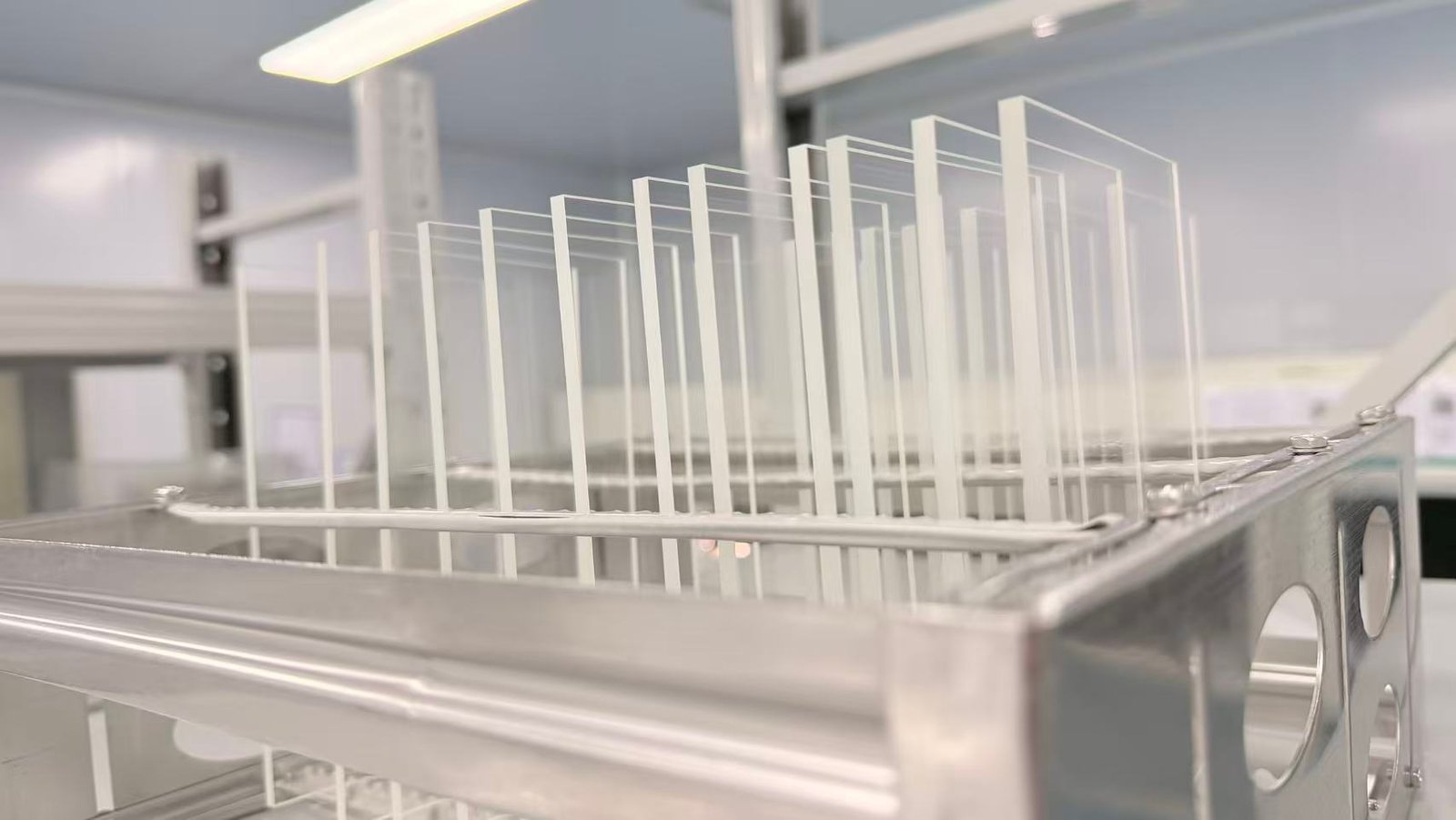
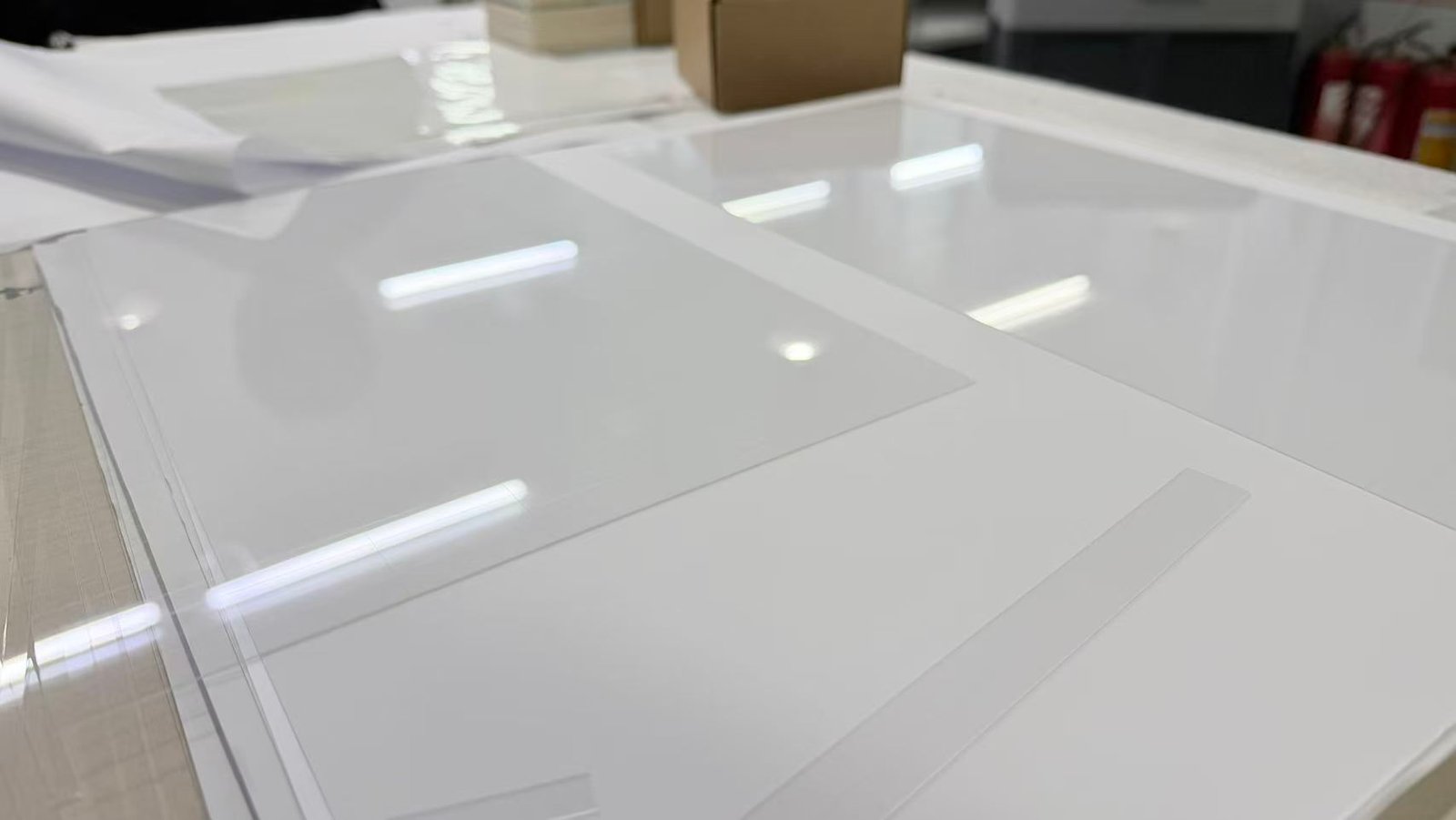
Photograph of flat glass sheets. Confirm the material identity and properties from project and batch records.
Soda-Lime Glass: Basic Property References
Typical values from published technical literature; not batch measurements or delivery guarantees from our company
Glass family
Soda-lime silicate glass; exact composition varies by sheet
Density
Approximately 2.50 g/cm³ at ambient temperature
Refractive index
Approximately 1.523 at the 589.3 nm sodium D line
Linear thermal expansion
Approximately 8.3–9.3 × 10⁻⁶ K−1. The published sources use different compositions and temperature ranges; check the selected sheet's test conditions for design.
Visible transmission of low-iron extra-clear sheet
See the thickness examples below. Transmission of an uncoated pane changes with thickness, iron content and measurement method.
Finished-part geometry and appearance
Specify thickness tolerance, TTV, flatness, surface roughness, scratches and edge chips separately on the drawing.
Basic properties are drawn from published float-glass technical data. Low-iron transmission examples are from a publicly available Chinese producer's product data. These are preliminary selection references, not a certificate for an unspecified sheet or finished component.
TRANSMISSION REFERENCE
Visible-light performance of low-iron extra-clear glass
The values below are examples for uncoated single panes of different thicknesses in one published Chinese low-iron float-glass data set. They are neither a guarantee for this page nor a wavelength-resolved spectrum.
3 mm
Visible-light transmission 91.6%
6 mm
Visible-light transmission 91.1%
10 mm
Visible-light transmission 90.6%
Thickness affects integrated transmission. For ultraviolet, near-infrared, filtering or narrowband laser work, request a spectral-transmission curve for the selected sheet at the specified thickness. Visible-light figures cannot establish performance at the operating wavelength.
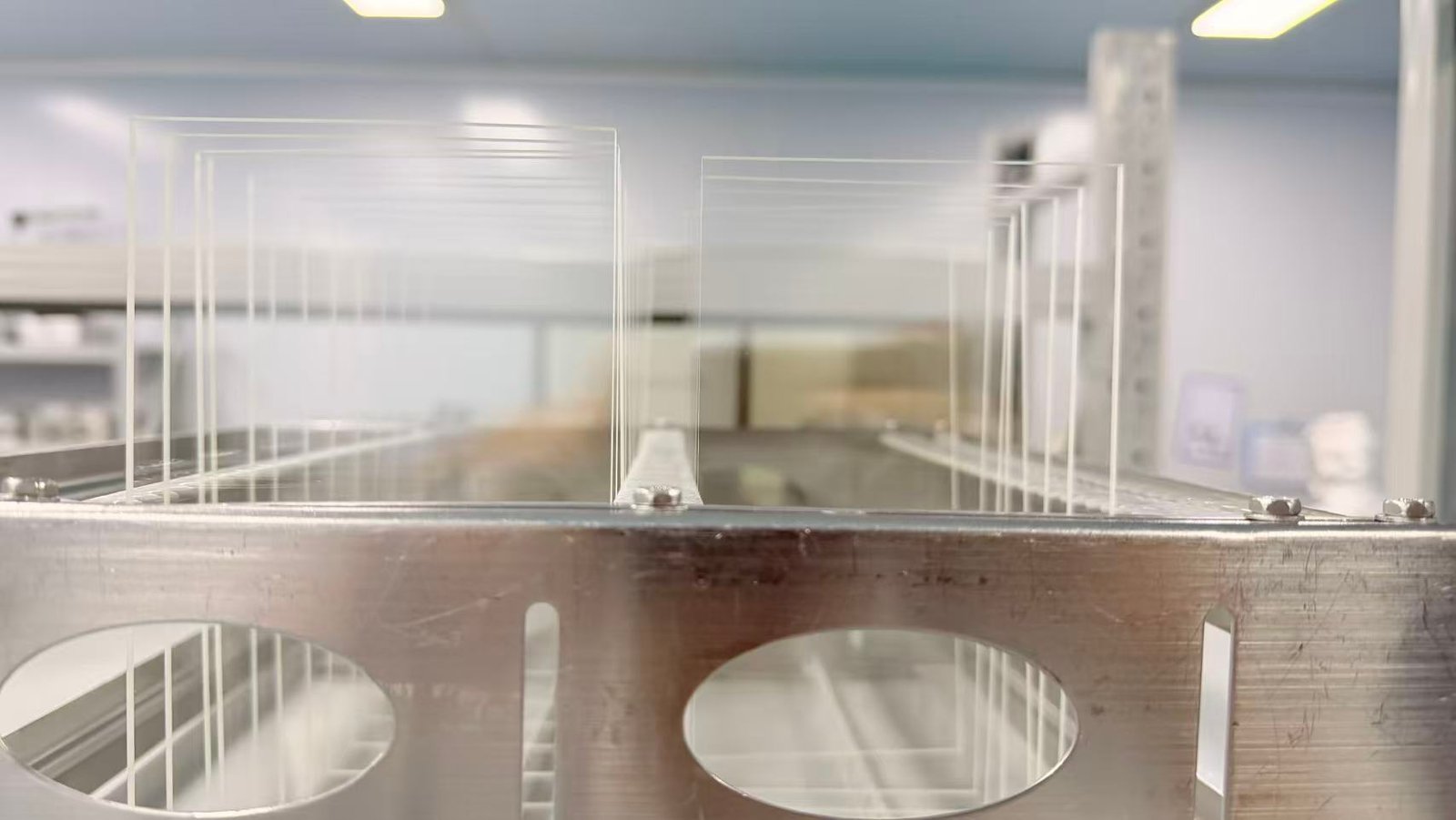
Separated handling reduces surface contact and edge impacts.
PRECISION FABRICATION
From flat sheet to drawing-based glass components
We assess cutting, edge finishing, surface treatment, cleaning and inspection against the incoming material, dimensions and acceptance plan. Achievable results are confirmed through drawings, samples and process review.
Cutting and edgesControl outline dimensions, microchips and chamfers to reduce assembly stress concentrations.Surface and cleanlinessSelect the as-made, polished or frosted face for the application and inspect for scratches and particles before packing.Geometry inspectionDistinguish thickness, TTV, flatness and parallelism and define the measurement area and method.
PROCESS PHOTOGRAPHS
Flat sheets, circular parts and machining
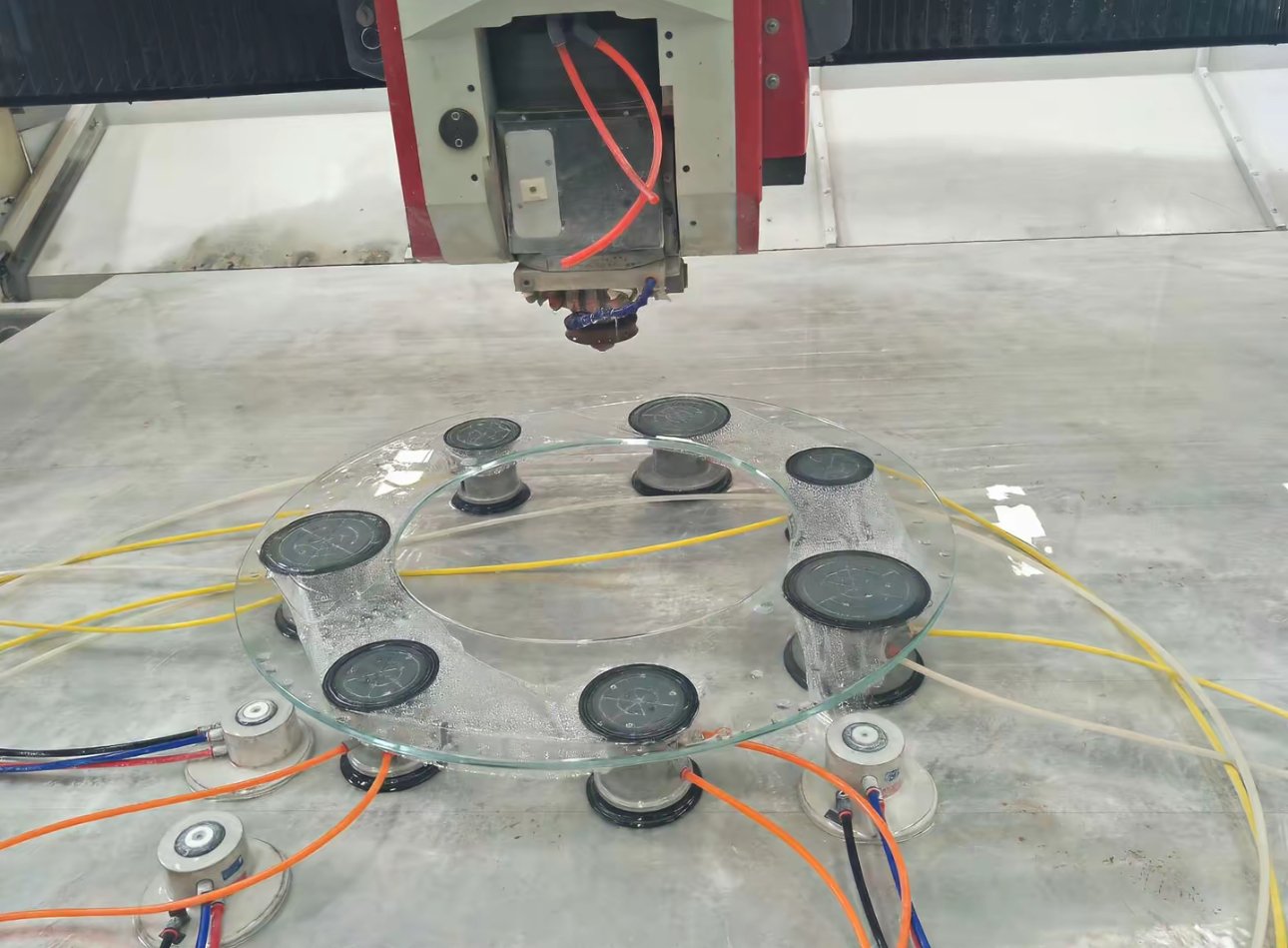
These photographs show glass handling and fabrication forms. An image alone does not establish a component's composition or inspection result.
Verify the outline and edge condition of circular sheets against the drawing.Confirm fixturing, hole positions and edge requirements before machining circular or shaped parts.
APPLICATIONS
Choose the material and tolerances from the use case
These are common selection considerations for the material family, not certifications for a particular finished part.
Transparent coversCheck appearance, transmission, edge safety and mounting dimensions.Equipment viewing windowsConsider impact and thermal conditions, sealing and the operating band.Display and presentation substratesCheck color cast, surface defects, thickness uniformity and cleanliness.Fabrication samplesUse drawings and a small trial batch to establish feasible processes and inspection methods.
FREQUENTLY ASKED QUESTIONS
Soda-Lime Glass Selection FAQ
How is soda-lime glass related to low-iron extra-clear glass?
Low-iron extra-clear sheet can be a member of the soda-lime silicate family. Its transmission and edge color depend on iron content, thickness and the specific sheet. Not all soda-lime glass is extra-clear.
Does transmission above 91% apply to every thickness?
No. The 3, 6 and 10 mm values shown here refer only to one published low-iron example. Specify the material, thickness, measurement band and batch documentation for purchasing.
Can it be used for ultraviolet or laser windows?
Transparency or visible-light transmission alone is insufficient. Verify transmission and absorption at the operating wavelength, thermal loading, surface quality and safety requirements using data for the selected sheet.
What should I send for a useful quotation?
Provide the application, sheet type, dimensions and thickness, quantity, operating wavelength, edge and surface requirements, finished-part drawing and inspection method.
Discuss Your Soda-Lime Glass Project
Send your drawing, material requirements and operating conditions. We will review material selection, fabrication and acceptance criteria.