


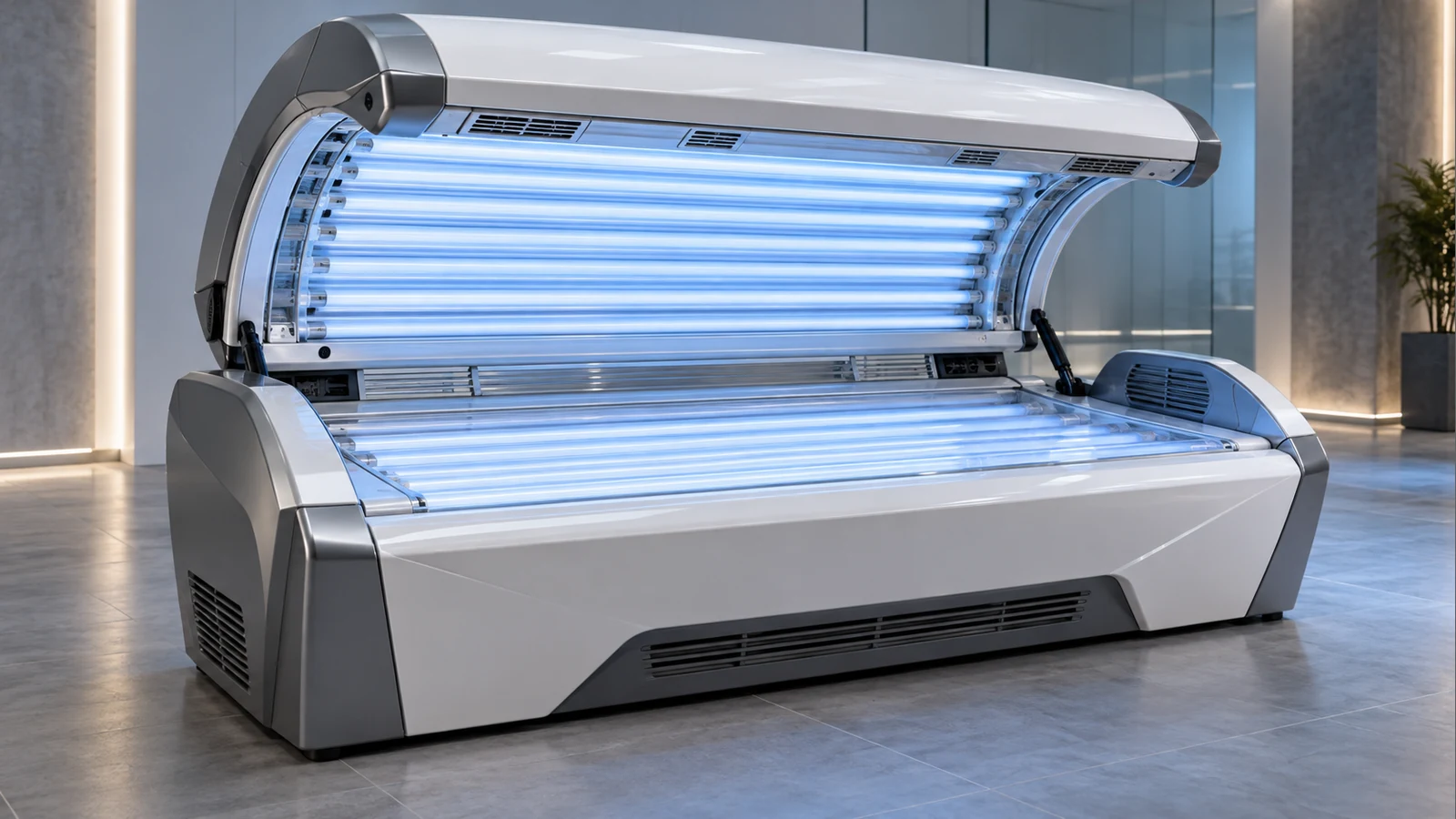
Custom glass strips for tanning beds and sunbed equipment require more than a nominal length and thickness. The glass must fit the assembly, meet the equipment manufacturer's optical requirements, and withstand the specified handling and operating conditions.
LIGHTING · Guangzhou Lighting Glass Co., Ltd. has long-term supply experience serving the tanning-equipment industry. This case describes our approach to made-to-drawing glass strips, from sheet selection and cutting to edge finishing, inspection and protective packing. It is a manufacturing case, not a claim that ordinary clear glass is a qualified UV safety filter.
Custom tanning bed glass: supply scope and actual dimensions
Custom Glass Strip Example: 1700 × 35 × 1.1 mm
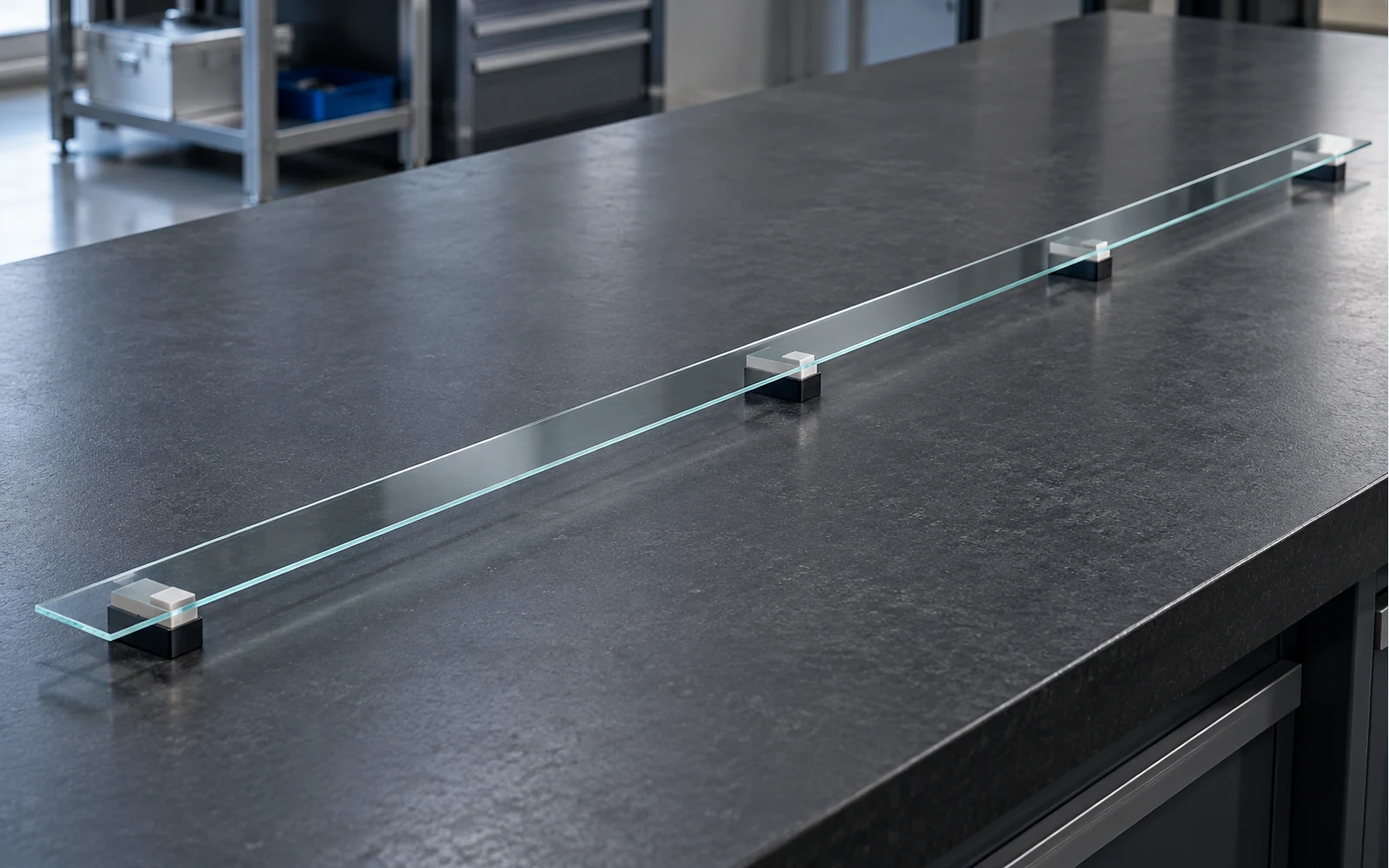
Length: 1700 mm · Width: 35 mm · Thickness: 1.1 mm.
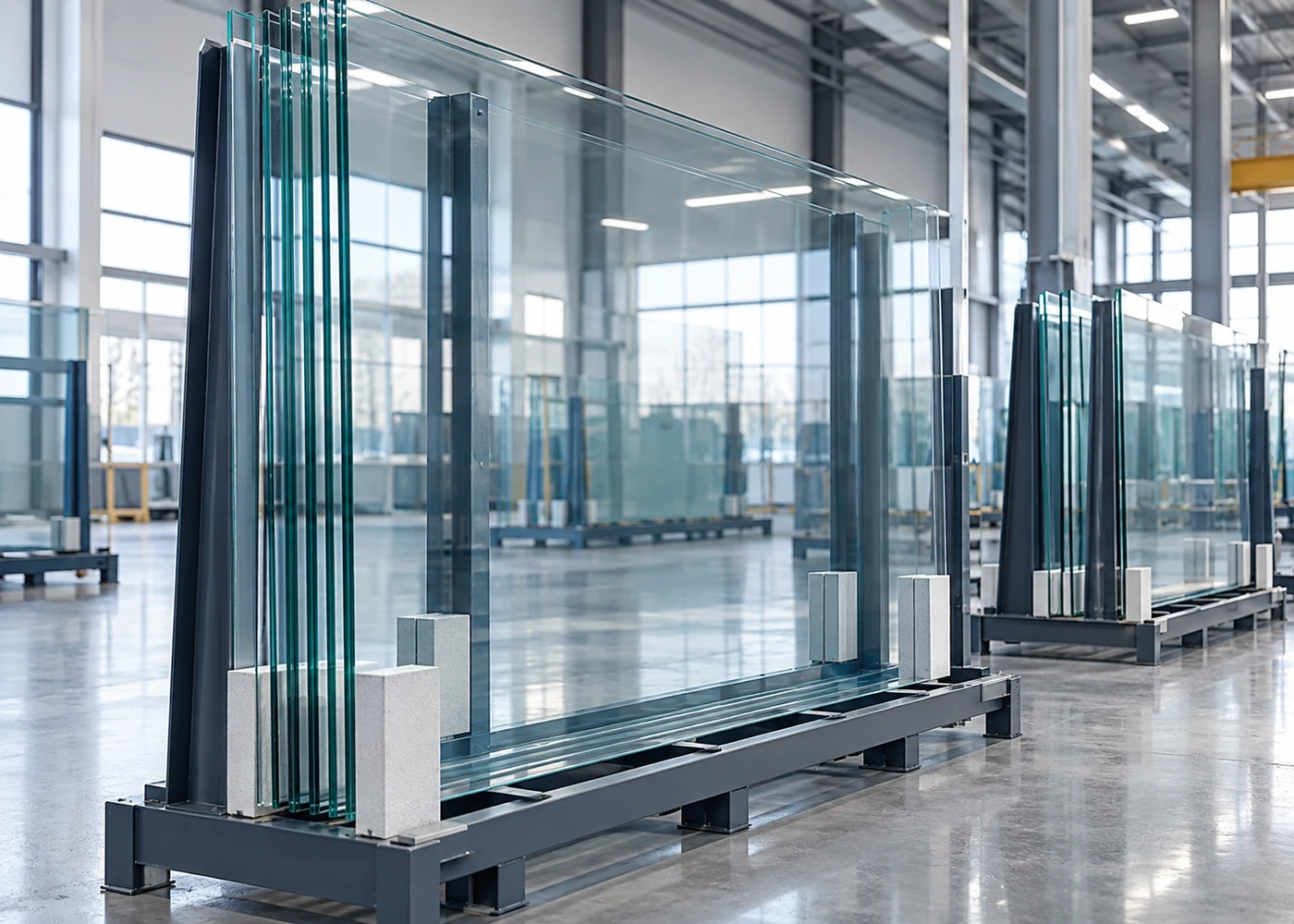
One actual finished-part example is 1700 × 35 × 1.1 mm (length × width × thickness). This is an example of a long, narrow glass strip, not our only available format. 2300 × 1700 mm raw sheets are available for custom cutting; the selected material grade, sheet thickness, usable area and current availability must be confirmed for each order.
| Specification level | Dimension or requirement | How to use it |
|---|---|---|
| Actual finished glass strip | 1700 × 35 × 1.1 mm | Manufactured product example; acceptance tolerances and edge details follow the approved drawing. |
| Raw sheet for custom cutting | 2300 × 1700 mm | Sheet format, not a finished component size. Confirm grade, thickness, edge allowance and cutting layout before ordering. |
| Other strip and panel sizes | Made to drawing | Length, width, thickness and quantities are reviewed together with processing and handling requirements. |
| Material identity | Agreed grade and traceable supply | A generic borosilicate description is not proof of a particular manufacturer's grade. |
Product size is not manufacturer stock size. Neither the 1700 × 35 × 1.1 mm finished strip nor the 2300 × 1700 mm sheet is presented here as a SCHOTT BOROFLOAT® 33 standard catalogue format. A BF33 order requires confirmation of the actual material source, grade and purchasing documents.
Selecting borosilicate glass for sunbed equipment
Begin with the component's function: a glass strip, a lamp-area component, an optical window and a safety-related filter can have different requirements. For a new design or replacement part, confirm the original material and optical specification before considering an alternative.
Thermal behavior and material identity
Borosilicate glass can be considered when low thermal expansion is important. For example, SCHOTT publishes a mean linear thermal expansion coefficient of 3.25 × 10⁻⁶ K⁻¹ over 20–300°C for BOROFLOAT® 33. This is a manufacturer reference for that named material—not a certified property of the product example in this case, and not an allowable operating temperature for an assembled sunbed. See the BOROFLOAT® 33 technical data and source information.
UV transmission must be specified, not assumed
SCHOTT's published transmission curves vary with wavelength and glass thickness. An optical specification therefore needs the relevant wavelength range, transmission limits, thickness and test conditions. A clear appearance or a generic “borosilicate glass” label cannot establish compliance with a tanning device's required transmission or attenuation.
Where the glass performs a filtering or protective function, retain the equipment manufacturer's qualified material specification and verify the finished assembly. Do not substitute generic borosilicate glass for a specified UV filter. No measured spectrum for the actual production example is claimed in this case.
For material background, consult our BOROFLOAT® 33 material guide. A material guide is not a declaration that every tanning-equipment strip uses that grade.
Processing custom glass strips from sheet to component

- Drawing and stock review. Confirm the finished geometry, glass identification, thickness, permitted defects and inspection plan. Review the 2300 × 1700 mm sheet layout with cutting and edge-finishing allowances.
- Cutting and workpiece support. Select a suitable cutting route for the confirmed glass and thickness. Long, narrow strips require support throughout handling and processing to limit bending and edge damage.
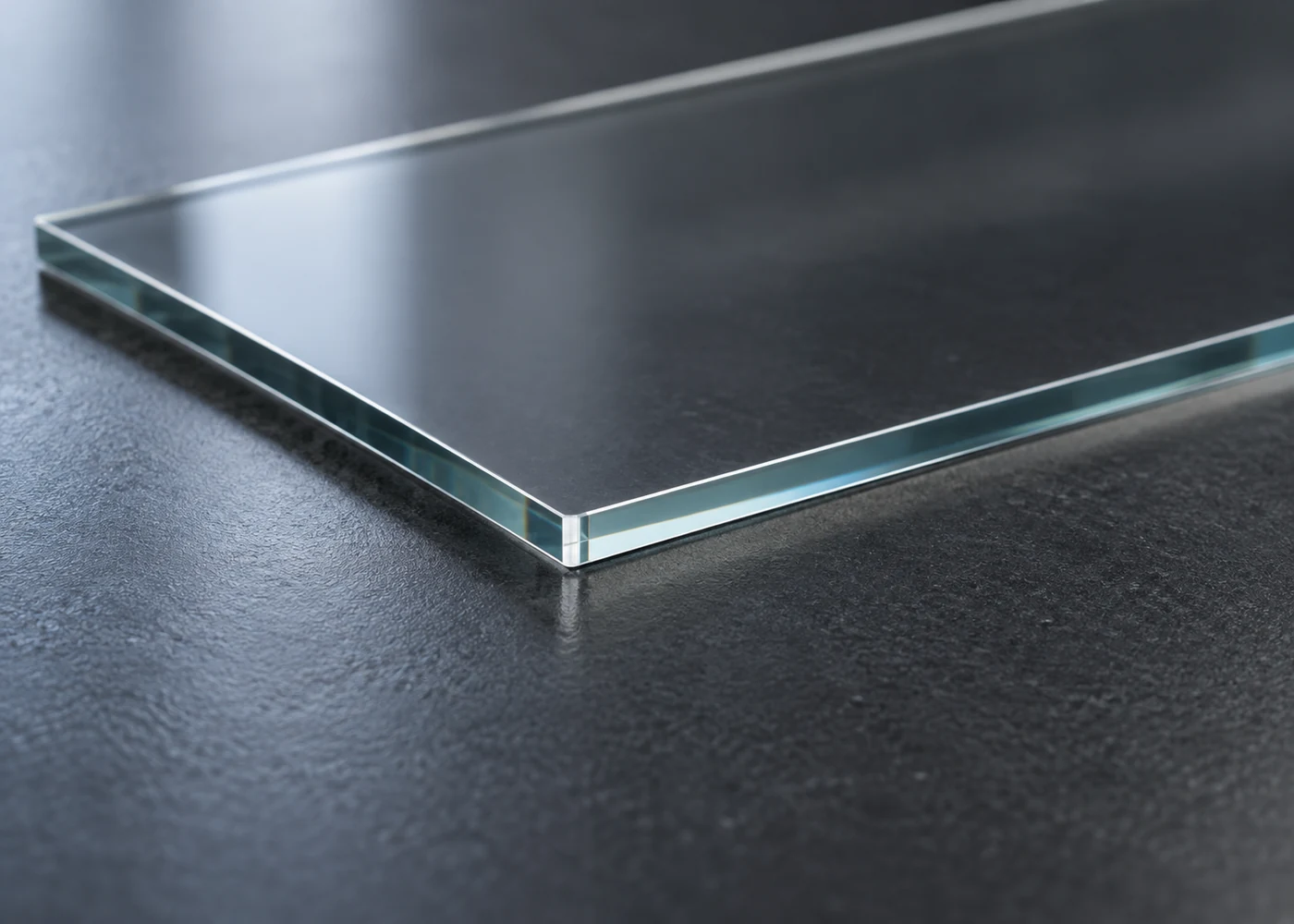
- Edge finishing. Define whether the design needs seamed, ground, beveled or polished edges. State corner requirements and allowable chips; “smooth edge” alone is not a measurable acceptance criterion.
- Additional features. Holes, slots, coatings or other operations require separate feasibility review. Their availability must not be inferred from a simple cut-strip example.
- Cleaning and inspection. Inspect dimensions, edge condition and visible surface defects against the agreed drawing. Specify any additional flatness, bow, optical or material-documentation requirements in the purchase order.
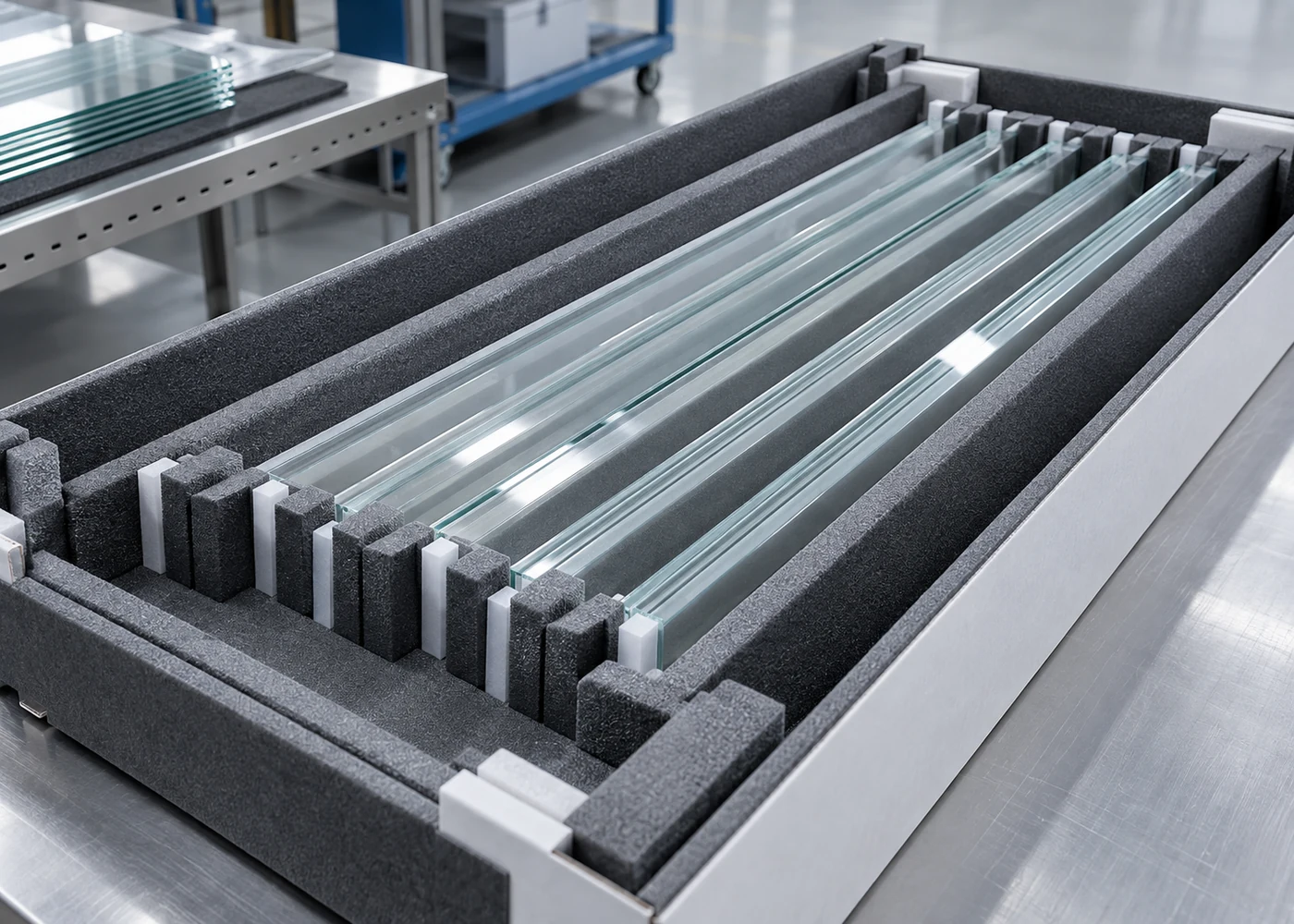
- Protective packing. Agree on separation, support, quantity per pack and identification so the long strips remain protected during transport and installation.
Engineering considerations for long, thin glass components
- Mounting and thermal movement: assess the frame material, clearances, support points and contact pads. Avoid assuming that a rigidly clamped strip will tolerate the same conditions as an unconstrained material sample.
- Temperature distribution: review lamp distance, ventilation, temperature gradients and repeated operating cycles. Manufacturer bulk-glass temperature data alone cannot qualify the finished equipment.
- Edge damage and handling: control contact with hard surfaces and protect the strip edges. Assembly forces, scratches and chips can affect component reliability.
- Dimensional acceptance: specify length, width, thickness, straightness or bow where relevant, and the measurement setup. Do not assume a tight tolerance without a process review.
- Cleaning and service: qualify cleaning agents, coatings and assembly materials together. Replacement parts should preserve the original equipment's optical and mechanical requirements.
- Equipment validation: the equipment manufacturer must evaluate the assembled product against the applicable safety and performance requirements. This case is not a device certification or a UV-protection claim.
What to send a tanning bed glass supplier
When comparing a sunbed glass supplier or requesting a custom tanning bed glass quotation, send a controlled drawing and the intended component function. A complete specification allows meaningful comparisons between offers for custom glass strips.
| RFQ item | Information to provide |
|---|---|
| Material | Required grade, manufacturer if mandatory, substitution policy and material documentation. |
| Geometry | Length × width × thickness in mm; tolerances, bow or flatness requirements and drawing revision. |
| Edges and surfaces | Edge profile, corner treatment, chip and scratch limits, coatings and any additional features. |
| Optical function | Required wavelength range, transmission or attenuation limits and acceptance test method, if applicable. |
| Operating conditions | Mounting arrangement, lamp proximity, temperature conditions and cleaning environment. |
| Commercial scope | Prototype and production quantities, repeat demand, destination, packaging and requested delivery schedule. |
For repeat supply, keep the approved drawing, material specification and inspection criteria under revision control. Changes to glass grade, thickness, edge processing or coating should be reviewed before production. Our long-term experience supplying the tanning-equipment industry supports this drawing-led approach; lead time and order quantity are confirmed for each quotation.
Protective packaging for long-term glass supply
Packaging should support the agreed strip geometry, isolate neighboring pieces and protect the edges. Confirm the packaging arrangement for sample and production deliveries.
Frequently asked questions
Is 1700 × 35 × 1.1 mm the only size available?
No. It is an actual finished-part example. We also support custom cutting from 2300 × 1700 mm sheets, subject to confirmation of grade, thickness, usable area and the requested cutting layout.
Is this strip automatically a BOROFLOAT® 33 product?
No. Dimensions do not identify the glass manufacturer or grade. If your drawing requires BF33, specify it explicitly so material identity and supporting documents can be confirmed before order acceptance.
Can borosilicate glass replace any tanning-bed UV filter?
No. A replacement must satisfy the original optical and safety requirements. Generic clear borosilicate glass must not be treated as equivalent to a qualified UV filter.
Can the edges and dimensions be customized?
Yes, the cutting size and edge requirements can be reviewed from your drawing. Specify tolerances, corner details and acceptance criteria; feasibility depends on the confirmed glass and part geometry.
Can you support repeat equipment-production orders?
We have long-term supply experience in this industry. Send your sample requirements, production quantities and forecast so material procurement, inspection, packaging and delivery can be planned for the project.
What is the fastest way to obtain a quotation?
Email your material, dimensions, quantity, processing requirements and drawing to jerry-ton@lightingglass.cn, or use the Contact us link below to view our company contact information.
Explore more precision glass case studies → · See glass-processing videos →