


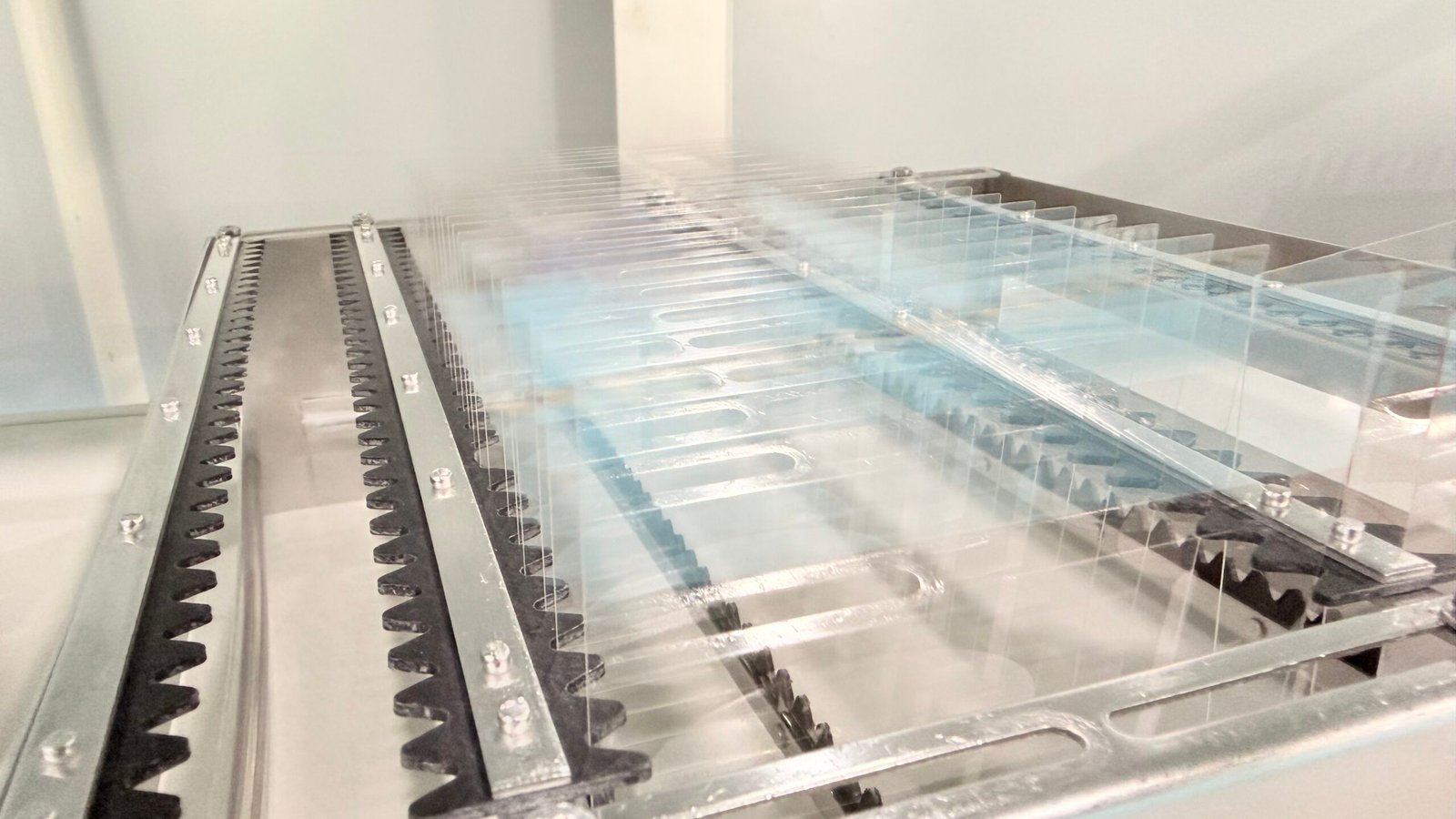
Practical experience with SCHOTT BOROFLOAT® 33
LIGHTING GLASS has processed SCHOTT BOROFLOAT® 33 for customers in a broad range of part sizes and formats. Our experience includes laser-drilled components, precision-cut flat pieces, double-sided polished sheets, single-sided polished sheets, double-sided frosted glass and circular glass wafers. Repeated work with this material has given our team established experience in planning fabrication and reviewing drawings.
Our technical specialists help turn a functional requirement into a workable specification: which surfaces matter, which dimensions control assembly, how holes and edges should be defined, and what needs to be inspected before delivery. Send the drawing and application requirements so that we can propose a suitable processing approach.
Manufacturer reference properties and end uses of BF33
SCHOTT describes BOROFLOAT® 33 as borosilicate float glass used for technical windows, instruments, lighting and other temperature-sensitive applications when the design requirements fit. Its published reference data give a refractive index nd of approximately 1.4714 at 587.6 nm, density 2.23 g/cm³ at 25 °C and linear thermal expansion of 3.25 × 10⁻⁶ K⁻¹ over 20–300 °C. Standard sheet thicknesses vary by format and must be checked for the ordered material. These are manufacturer's material values, not measurements or guarantees for our processed parts.
BF33 processing work we have completed
Laser-drilled glass
We have completed laser drilling in BF33. A new drawing should define hole diameter, position, pitch, distance to the edge and permitted entrance or exit chipping. Hole geometry and the intended function guide the processing and inspection plan.
Precision-cut flat pieces
Our experience covers precision-cut BF33 pieces in different sizes. We review external dimensions, squareness, thickness, edge condition and handling requirements together, so the part can fit its intended assembly.
Double-sided polished sheets
We have produced BF33 sheets with both faces polished. Thickness, TTV, flatness, parallelism and surface quality are separate specifications; each should be stated with its measurement method and acceptance requirement.
Single-sided polished sheets
We have also processed BF33 with one polished working face. Identify that face on the drawing and specify the required condition of the opposite face, along with surface protection and packaging requirements.
Double-sided frosted glass
Our completed work includes BF33 with both faces frosted. Define the required surface texture, uniformity, appearance and any optical scattering requirement. Frosting should be specified by the application rather than by appearance alone.
Circular glass wafers
We have processed BF33 wafers in 2, 4, 6, 8 and 12 inch size classes. Diameter, edge profile, orientation features, thickness and surface condition are reviewed for the actual wafer drawing.
BF33 components and circular glass blanks
The photographs below show a BF33 laser-drilled sample and circular borosilicate blanks. Dimensions and inspection requirements for a new order are established from its drawing.

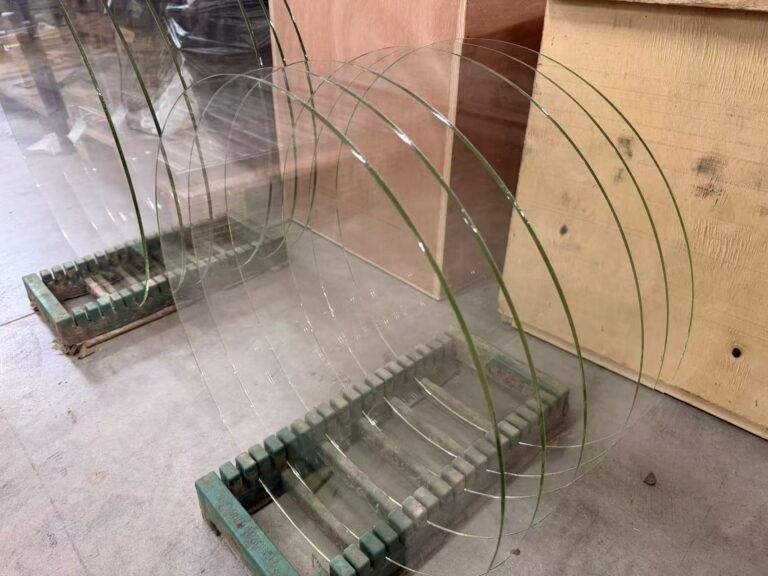
BF33 glass wafers: 2 to 12 inch experience
All five listed wafer size classes are part of our processing experience. Inch designations identify the size class; the actual finished diameter and tolerance must follow the customer's drawing. Specify any notch, flat, edge bevel or other orientation requirement separately.
Polished thickness down to 0.9 mm: we have achieved a finished BF33 thickness of 0.9 mm through polishing. The suitable diameter, geometry, thickness tolerance, TTV and surface requirements are assessed together for each order. This thickness figure does not imply identical tolerances for every wafer size or shape.
Technical support from drawing to inspection plan
Our experienced technical staff can discuss the material, part geometry and finish with your engineering or purchasing team. The objective is a clear processing plan and measurable acceptance criteria, including the interfaces that matter for your next manufacturing or assembly step.
- Geometry: outer dimensions or diameter, thickness, holes, slots, edge distances and assembly datums.
- Functional surfaces: polished or frosted faces, working-face identification, clear aperture and handling protection.
- Dimensional inspection: agreed thickness sampling, TTV, flatness and parallelism where required.
- Surface and edge inspection: agreed scratch, dig, chip and edge-quality requirements, with the relevant inspection method.
- Material and delivery: exact material designation, traceability documents when required, cleaning and packaging.
- Project planning: quantity, sample needs, intended use and requested delivery schedule.
For material background, see our BOROFLOAT® 33 material page and guide to BF33 temperatures and engineering properties. This case page describes our processing experience; the drawing review establishes the deliverable specification for your component.
Send your BF33 drawing for a practical solution
Include a PDF or CAD drawing, quantities, target thickness, required finish on each face, critical tolerances and any hole or edge requirements. If the specification is still being developed, describe the function and the dimensions that matter most. Our specialists can help identify the points to settle before quoting.